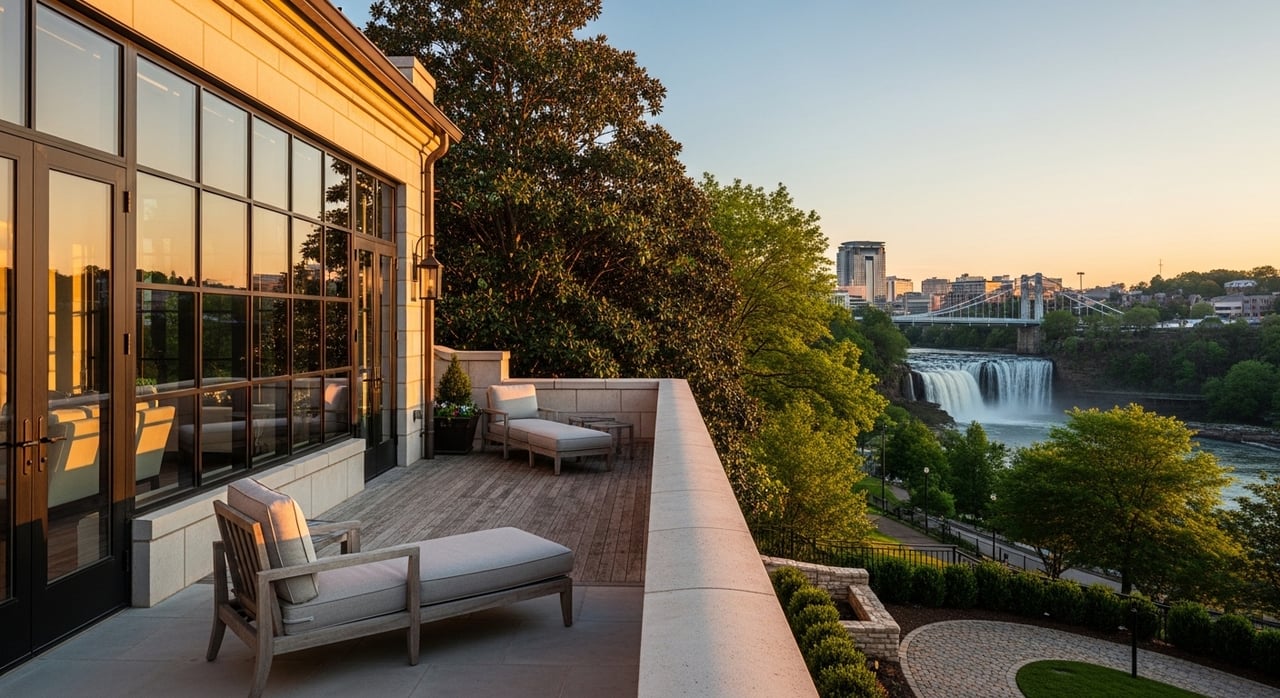
What It’s Like To Live In Greenville, South Carolina
May 26, 2026
May 26, 2026
If you are thinking about a move to Greenville, you are probably asking a simple question with a lot behind it: what does daily life actually feel like here? You want more than a list of attractions. You want to know how the city moves, where people spend their time, and whether the lifestyle matches what you want next. This guide will help you picture that day-to-day experience in Greenville, from downtown energy to outdoor access and suburban options. Let’s dive in.
Living in Greenville often means living in a wider Upstate lifestyle, not just inside the city itself. The city had an estimated 75,310 residents in July 2025, while Greenville County was much larger at 583,125. That difference shapes how people experience the area day to day.
In practical terms, Greenville works like a compact city center surrounded by a fast-growing suburban ring. Since April 2020, Greenville County grew by 11.0%, while the city grew by 5.9%. Nearby communities like Greer, Simpsonville, and Mauldin are large enough to function as part of the same everyday market.
For you, that means there is no single “Greenville lifestyle.” Some people want to be close to downtown restaurants and events. Others prefer more space in a nearby suburb while still staying connected to the city’s dining, arts, and outdoor amenities.
Downtown is the part of Greenville that gives the area its clearest identity. Main Street runs through key gathering spots like NOMA Square and ONE City Plaza, continues past the performing arts center, crosses the Reedy River at RiverPlace, and reaches into the West End. That layout creates a central area where walking feels natural and activity stays visible.
This is also where you feel the city’s steady rhythm. Downtown hosts more than 300 events per year, which helps keep the area active well beyond the standard workweek. From May through October, the TD Saturday Market adds another layer of regular foot traffic with more than 75 local vendors.
If you like places where you can step out for dinner, stroll after a show, or spend part of a Saturday browsing vendors, downtown Greenville offers that kind of routine. It feels lively without being overwhelming. That balance is a big reason many buyers relocating from larger or more congested markets find Greenville appealing.
Greenville is easier to navigate than many larger metro areas, but it is still mostly a driving city. The mean commute time is 19.0 minutes in the city and 23.4 minutes in the county. That suggests daily drives are generally manageable, especially compared with larger regional markets.
At the same time, Greenville is not a transit-first city. Greenlink serves Greenville, Mauldin, Simpsonville, Travelers Rest, and nearby unincorporated areas through 12 fixed routes. Service generally runs every 30 to 60 minutes, most service is weekday-based, Saturday service is reduced, and there is no Sunday service outside the downtown trolley.
That means most households still rely on a car for work, errands, and family logistics. The good news is that downtown is set up to handle that reality. Multiple garages and parking options support easy access to central destinations, so you can still enjoy walkable pockets without needing a completely car-free lifestyle.
One of the strongest parts of living in Greenville is how often food becomes part of the social calendar. Downtown Greenville has more than 200 restaurants, which is notable for a city of this size. The variety also stands out.
Downtown alone offers cuisine from 34 different countries, and Greenville County is home to 230 international firms from 27 countries. That broader international presence helps explain why dining here can feel more varied than you might expect.
If you enjoy trying new restaurants, meeting friends out, or having a steady rotation of casual and special-occasion options, Greenville delivers well. The dining scene is not just convenient. It is one of the clearest ways the city expresses its personality.
In Greenville, dining culture goes beyond restaurants and into public events. Fall for Greenville is a three-day street festival with more than 50 local restaurants, more than 250 dishes, more than 50 beers on tap, and more than 80 musical acts across six stages. It turns downtown into a large shared gathering space.
Euphoria adds another major event to the annual calendar. Founded in 2006, this four-day food, wine, and music festival includes tasting events, concerts, culinary programming, and community support. If you enjoy cities where public events bring people together on a regular basis, Greenville has that pattern built in.
Greenville’s arts scene is one of the reasons the city feels more complete than a typical mid-sized market. The Peace Center is a six-acre downtown destination for performances and entertainment, and the Peace Concert Hall seats 2,115. That gives the city a true anchor for live events.
Just three blocks from downtown, Heritage Green functions as the Upstate’s urban arts and cultural campus. It includes the Greenville County Museum of Art, the Upcountry History Museum, the Children’s Museum of the Upstate, the main library, and the Little Theatre. These are not isolated attractions on the edge of town. They are part of the central experience.
The Greenville County Museum of Art adds even more depth. It holds the world’s largest public collection of Andrew Wyeth watercolors and is the only museum in the Upstate fully accredited by the American Alliance of Museums. For you as a resident, that means culture in Greenville feels accessible and woven into everyday life rather than reserved for occasional special trips.
Greenville’s outdoor access is not just a weekend bonus. It is a major part of how people live here. The Prisma Health Swamp Rabbit Trail is a 23-plus-mile multi-use greenway along the Reedy River that connects schools, parks, and local businesses.
Its longest continuous segment runs from north of Travelers Rest through Furman University and past downtown Greenville. The network also reaches Conestee Nature Preserve and extends toward Fountain Inn and Simpsonville. That gives the region a strong active-living thread that connects recreation with everyday routines.
If you bike, run, walk, or simply like having scenic public space nearby, the trail system adds real value to daily life. It helps Greenville feel connected and outdoorsy without requiring a long drive to enjoy that side of the area.
Another big lifestyle advantage is Paris Mountain State Park. It sits just six miles north of downtown Greenville and covers 1,700 acres. The park includes forest, streams, lakes, hiking trails, and mountain-biking trails.
It also offers a seasonal swimming area, boat rentals, cabins, camping, Wi-Fi, and EV charging. That mix makes it a convenient escape when you want nature close to home. For many residents, having a state park this near downtown is one of the most appealing parts of Greenville living.
A big part of choosing Greenville is deciding how you want to balance convenience, space, and pace. Downtown offers the most walkability, the strongest concentration of restaurants and arts, and easy access to major events. If you want an active, central lifestyle, that part of the city naturally stands out.
The surrounding communities offer a different setup. Greer had 46,316 residents in 2024, Simpsonville had 28,078, and Mauldin had 29,746. These are not tiny bedroom communities. They are sizable hubs with their own everyday amenities and a strong connection to the larger Greenville area.
For many buyers, the sweet spot is living in a suburb and heading downtown when they want dining, performances, festivals, or a change of pace. That is one of the most common lifestyle patterns in the area. It lets you choose the kind of home setting you want without giving up access to what makes Greenville fun.
Greenville feels polished, active, and manageable. You get a compact downtown with real walkability, a strong restaurant scene, a busy festival calendar, and meaningful arts access. At the same time, you are living in a region where driving is still part of daily life and surrounding suburbs play a major role in the housing and lifestyle picture.
For many people, that is exactly the appeal. Greenville gives you enough city energy to stay engaged, enough outdoor access to keep life balanced, and enough regional growth to offer different ways to live. It feels approachable, not oversized.
If you are relocating, moving up, or trying to decide which part of the Greenville area fits your lifestyle best, having local guidance can make the process much clearer. If you want help exploring Greenville, Simpsonville, Greer, Mauldin, or nearby new construction opportunities, connect with Mariana Taramasco for thoughtful, personalized guidance.
From first showing to final signature, Mariana delivers expertise and care every step of the way. Let’s make your move happen.
Mariana Taramasco
Address
Greenville, SC 29601–29615
SERHANT Residential Brokerage Greenville Real Estate Agent