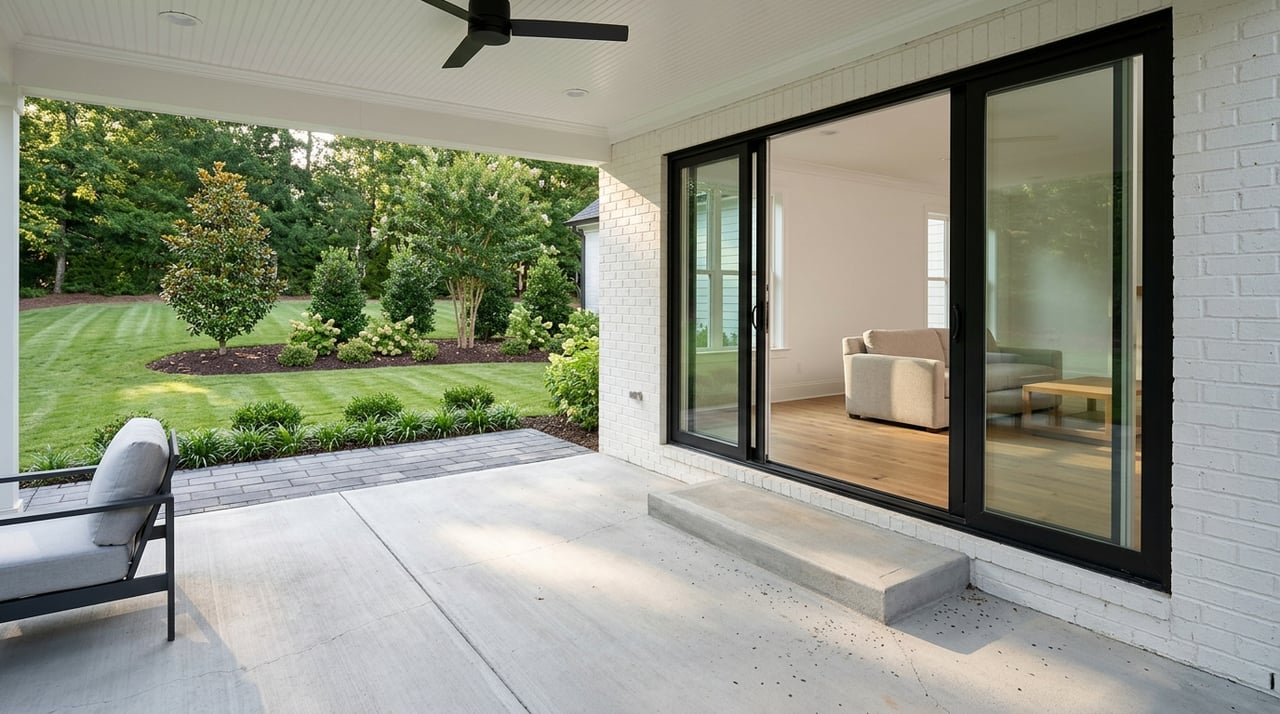
New Construction Homes In Greenville: Key Things To Know
July 16, 2026
July 16, 2026
Buying a brand-new home in Greenville can feel like the best of both worlds: you get modern design, new systems, and a fresh start. But new construction is not always as simple as choosing a floor plan and waiting for move-in day. If you want to make a smart decision, it helps to understand how pricing, timelines, inspections, and local approvals really work. Let’s dive in.
New construction appeals to many buyers because it often offers a more turnkey experience than resale. Builders commonly highlight newer materials and systems, energy-efficient appliances, smart-home features, and builder warranties as key benefits.
You may also find communities with amenities such as trails, playgrounds, pools, or recreation areas, depending on the development. At the same time, every new-build opportunity is a little different, so it helps to compare what is actually included instead of assuming all communities offer the same value.
One of the biggest misconceptions about new construction in Greenville is that it fits one price point or one style. In reality, the local market includes everything from townhomes in the high $200,000s to custom-oriented homesites priced in the high $100,000s before the home itself is built.
That variety can be helpful if you are trying to match your budget, commute, and lifestyle goals. It also means you should look closely at whether a community offers attached homes, single-family homes, quick move-in inventory, or a more custom path.
In West Greenville, Bellevue has offered both single-family homes and townhomes with pricing starting in the high $200s. In Simpsonville, communities such as Fairview Village Townhomes and Riverbrooke Townhomes have been positioned in the mid to high $200s, while Greenrich Mill has been marketed from the high $300s.
Along the Piedmont and Greenville corridor, Cedar Shoals and The Farm at Wells Creek have offered single-family options across different price ranges. In Greer, Le Jardin has presented a custom-oriented option with homesites ranging from about 0.4 acre to 1.75 acres. In Travelers Rest, Magnolia Trail has shown quick move-in townhomes around the upper $200,000s.
Because builders frequently update pricing, products, square footage, and availability, it is best to treat published numbers as a snapshot, not a promise. A community that fits your budget today may look different a few weeks later.
This is one of the most important things to understand before you tour new communities. Builder marketing often starts with a base price, but your final price can change based on the plan, homesite, and the options you choose.
That means two buyers choosing the same floor plan may end up with very different final numbers. Lot premiums, structural changes, upgraded finishes, and added features can all move the total upward.
When you compare new construction homes in Greenville, watch for items like:
A polished model home can make upgrades feel standard, even when they are not. Ask for clarity on what comes included in the base price and what costs extra.
With new construction, timing depends on what you are buying. Some homes are already under construction and may be available as quick move-in or now-building inventory. Others are ready-to-build homes where you choose a homesite, select structural options, and then move into the design phase.
That difference matters if you are relocating, coordinating a sale, or trying to move by a specific date. A home that is already in progress may offer a faster path, while a from-scratch build may give you more personalization.
Many builders present the process in stages, not as a single event. That path often includes:
Understanding these stages can help you plan with fewer surprises. It can also help you ask better questions early, especially if you are buying from out of state.
Local approvals are an important part of the new construction process in Greenville County. County guidance states that a permit is required anytime a new building is constructed.
The county also notes that permits are submitted through eTrakit and that the typical processing period is about one to two weeks. For new construction in the county, a paid Greenville Water receipt is also required.
Just as important, no occupancy or use is allowed until a Certificate of Use and Occupancy has been issued. In simple terms, that means a home is not ready for move-in just because it looks finished.
This point is easy to miss, especially for first-time new construction buyers. A county certificate of occupancy shows that the home passed the required code-related steps for occupancy, but it is not the same as your own independent home inspection.
South Carolina separately licenses home inspectors, and the state defines a home inspection as a report on the visible and readily accessible condition of the residence and its systems. That is a different role from county code enforcement.
Even in a brand-new home, an inspection can help identify visible issues before closing. Buyers often choose to schedule an independent inspection so they have another layer of review focused on the home's accessible condition and systems.
For many buyers, this is a smart step before final walkthrough and closing. It can give you more confidence and a clearer list of items to discuss before you take ownership.
In South Carolina, the Residential Property Condition Disclosure Act applies to many residential sales, but it excludes the first sale of a dwelling that has never been inhabited. That means a brand-new home may not come with the same seller disclosure form you might expect in a resale transaction.
That does not remove the importance of doing your own due diligence. State law still says the purchaser’s duty to inspect the physical condition of the property is not limited by the Act.
For you as a buyer, the takeaway is simple: do not assume that “new” means “nothing to check.” Review documents carefully, ask questions, and complete your inspections.
Warranties are a major selling point for new construction, and for good reason. South Carolina’s Homebuyers Protection and Warranty Act describes a familiar express warranty structure when the builder provides a written express warranty.
That framework includes one year for defects tied to building standards and workmanship, two years for plumbing, electrical, heating, cooling, and ventilation installation, and ten years for major structural defects. Still, the actual written warranty and service-request process matter just as much as the summary.
Before you close, make sure you understand:
This is one area where details matter. A clear understanding now can save frustration later.
One of the biggest differences between new construction and resale is the design-selection process. In many builder programs, buyers work through finishes and option packages after the contract stage.
This can be exciting, but it can also stretch your budget if you go in without a plan. Flooring, cabinetry, countertops, tile, hardware, lighting, and trim details can add up quickly.
A smart approach is to decide early which upgrades matter most to you. Focus first on changes that are harder to do later, such as structural features or certain built-in elements, and then weigh cosmetic upgrades against your overall budget.
New construction in Greenville is shaped by statewide code and county-specific code administration. One local example is radon control, which appears in Greenville County building-code materials through the IRC radon-control appendix reference.
You do not need to be a code expert to buy a new home, but it helps to know that local building requirements can influence how homes are built and reviewed. That is another reason to stay organized and ask thoughtful questions during the process.
If you are comparing new construction homes in Greenville, try to look beyond the model-home experience. A beautiful sales center tells only part of the story.
Instead, compare the full picture:
This kind of side-by-side review can help you make a more confident decision. It is especially useful if you are relocating or narrowing choices from a distance.
Choosing a new construction home in Greenville can be exciting, but the best results usually come from going in informed. When you understand how pricing, permits, inspections, disclosures, warranties, and design selections work, you are in a much stronger position to buy with clarity and avoid preventable surprises.
If you want guidance tailored to your timeline, budget, and preferred Greenville-area communities, Mariana Taramasco can help you navigate the process with a strategic, high-touch approach.
From first showing to final signature, Mariana delivers expertise and care every step of the way. Let’s make your move happen.
Mariana Taramasco
Address
Greenville, SC 29601–29615
SERHANT Residential Brokerage Greenville Real Estate Agent